T-SQLStored proceduresDatabases
Safely change large T-SQL applications.
The application context behind every important change: dependencies, code verification, runtime evidence and remediation across large, stored-procedure-heavy SQL Server estates.
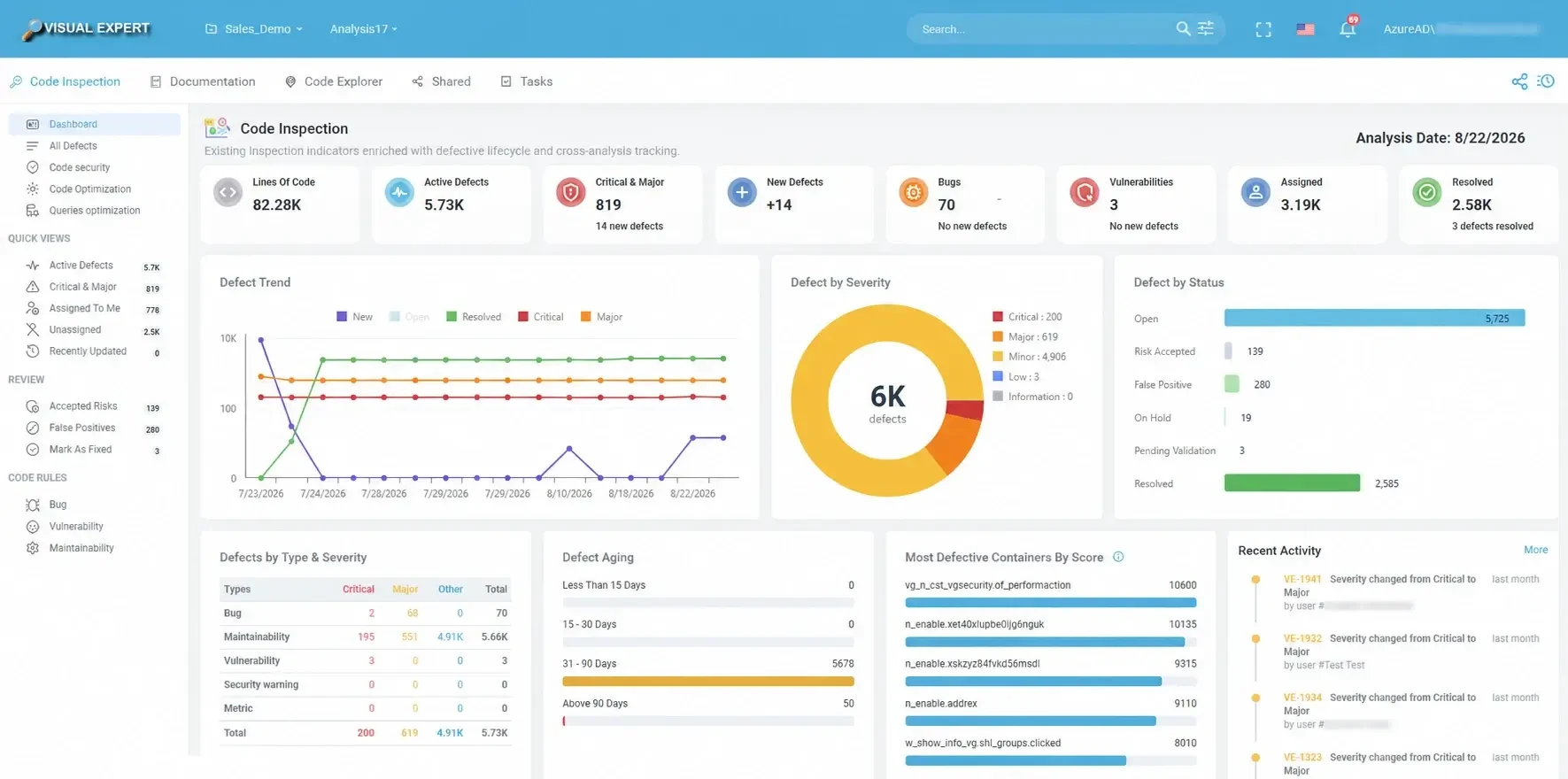
Know what a change touches before you modify it
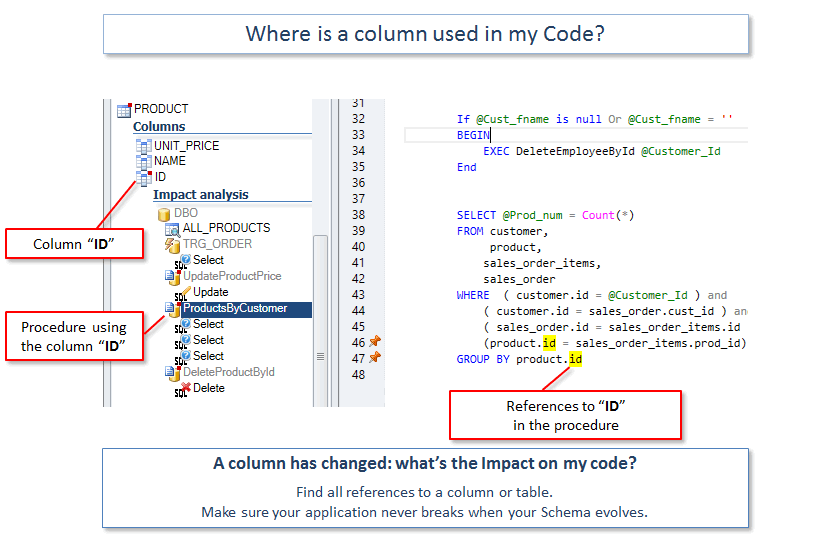
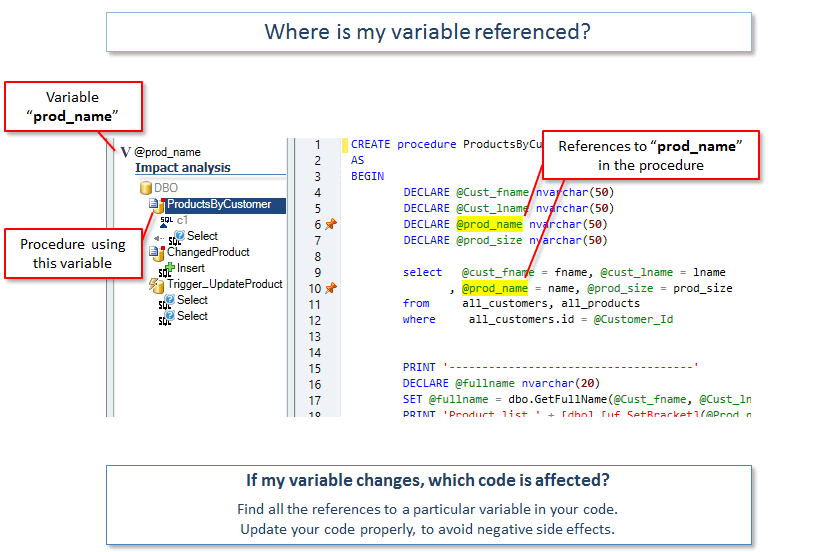
Visual Expert analyzes procedures, functions, views, triggers, tables and columns to build a navigable dependency model of large T-SQL applications.
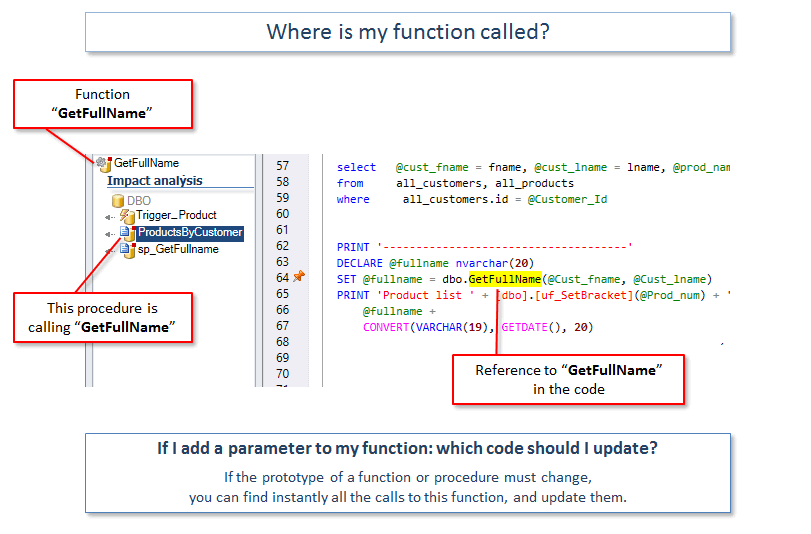
- Impact analysis before schema or code changes: every reference to a procedure, table or column.
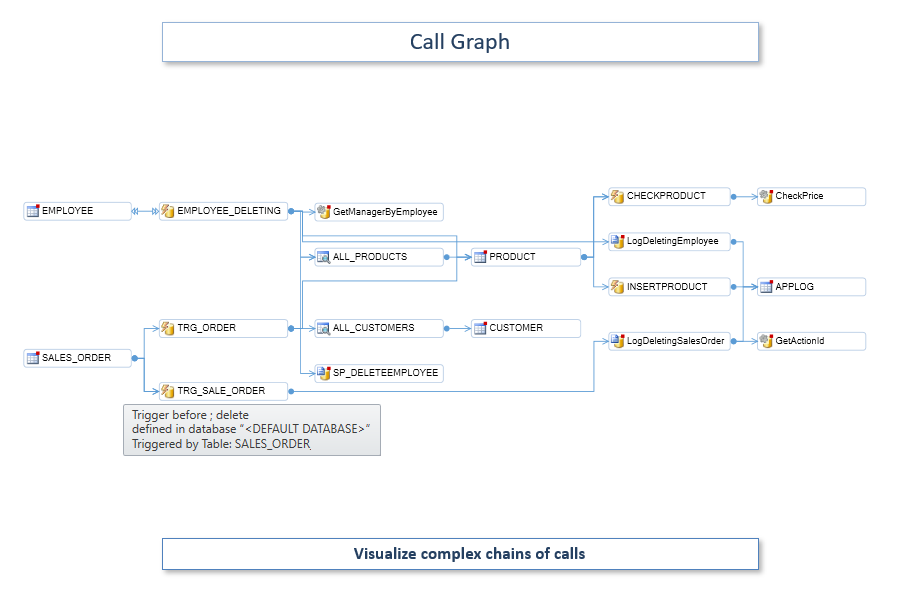
- Call graphs and reverse call graphs across stored procedures and functions.
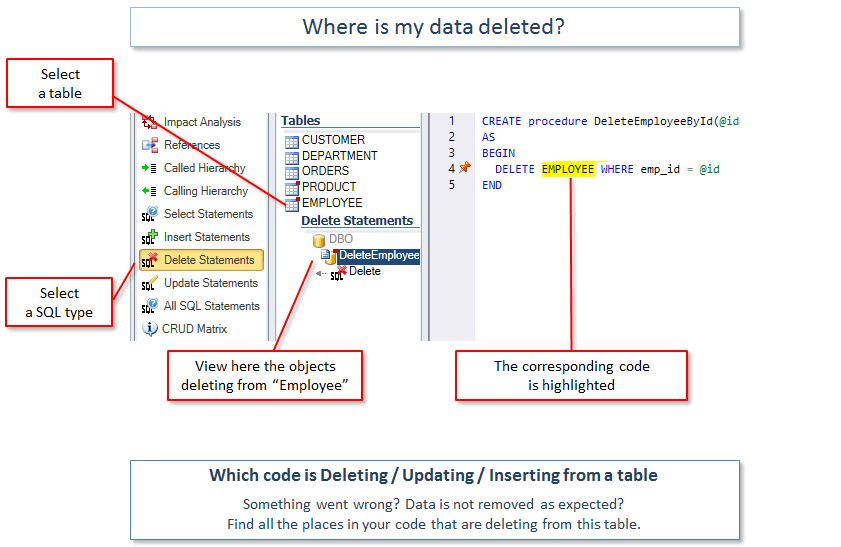
- Table- and column-level references and CRUD relationships.
- Possibly unused objects listed for review. References built only in dynamic SQL are not visible to static analysis.
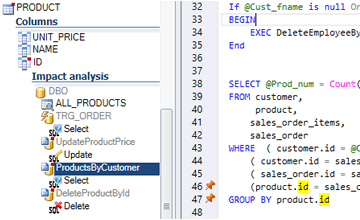
Move from isolated findings to actionable application context
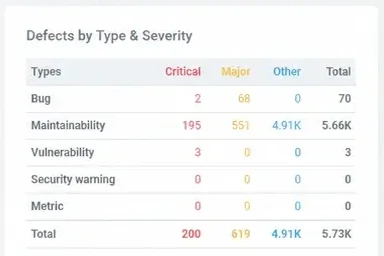
Systematically identify bugs, maintainability problems and coding issues, then see where each finding sits in the application before deciding what to fix.
- Bugs, maintainability and quality issues across the T-SQL code.
- Callers and data usage of the code behind a finding, to measure the impact of a correction before making it.
- Naming conventions checked across the database code.
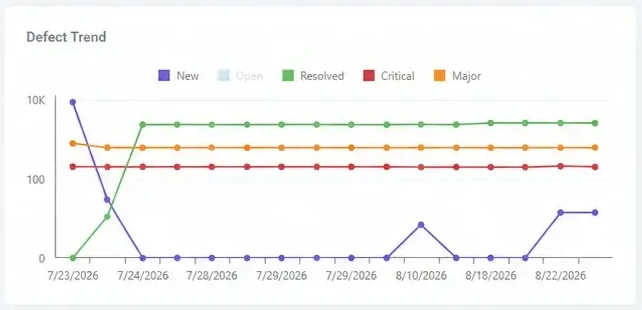
- New and remaining defects after each analysis, and their trend over time.
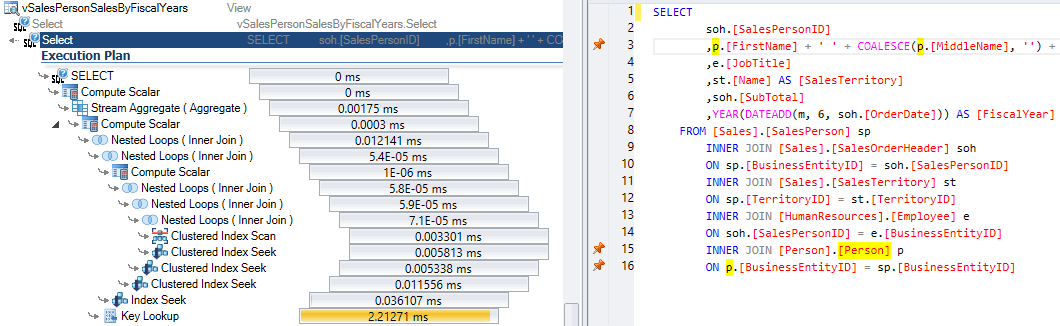
Go from “this query is slow” to the code path and change risk behind it
Visual Expert combines SQL Server execution data with static code analysis to identify hotspots and relate them to procedures, call chains and dependent objects.
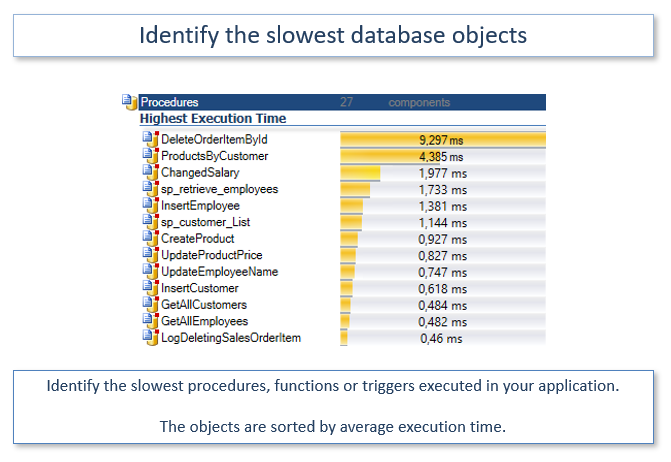
- Slowest procedures, functions and triggers, by average and cumulated execution time.
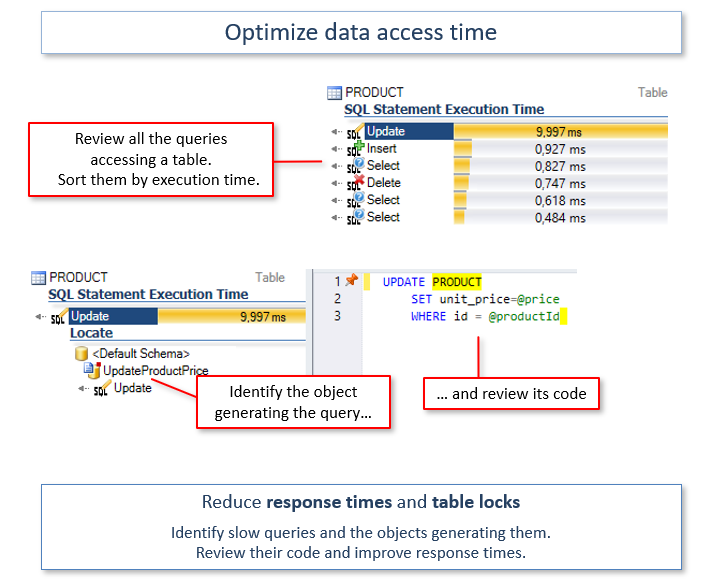
- Execution time along a chain of calls, to find the object that slows down a process.
- Execution plans of SELECT, INSERT, UPDATE and DELETE statements, with the time of each operation.
- Missing indexes: columns used in WHERE, GROUP BY, HAVING or ORDER BY clauses and not indexed.
Manage findings through resolution
Review and qualify issues, assess their application impact, assign remediation work, track progress and confirm resolution with the next analysis.
- Qualify findings: false positive, accepted risk or on hold. Decisions and history stay recorded.
- Assign a defect and a task is created, with an assignee, a priority and a due date.
- Mark as fixed: the defect waits in Pending Validation until the next analysis checks it.
- Potential Solution (AI) proposes a remediation approach when VE AI is enabled.
Defect lifecycle
Reviewed defects can also be set aside. Their history is kept.
Risk AcceptedFalse PositiveOn Hold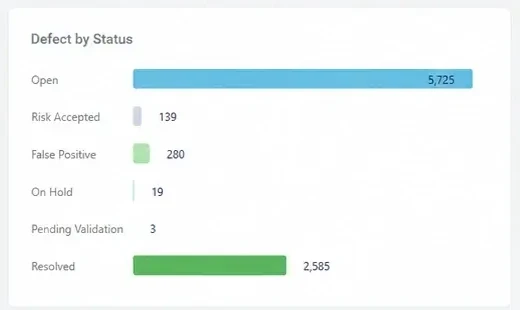
Make complex SQL Server applications easier to understand and hand over
Generate documentation, diagrams, call graphs and CRUD matrices from the analyzed application, and use the same model to support cleanup, modernization and knowledge transfer.
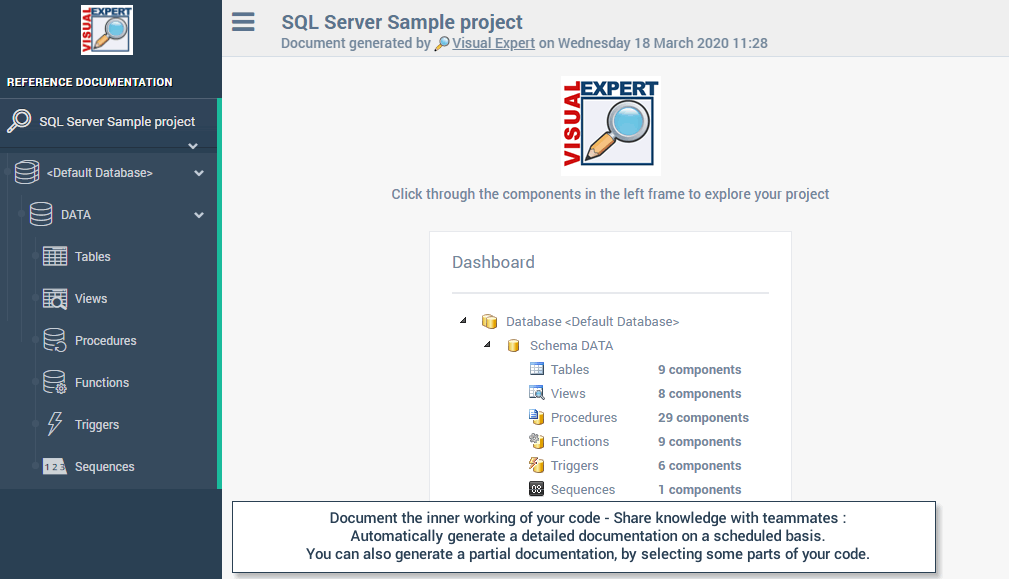
- Technical documentation generated from the code, refreshed on a schedule.
- Diagrams and call graphs to share application structure with developers and architects.
- T-SQL explained and commented by VE AI, when enabled.
- Possibly obsolete objects identified before cleanup or modernization.
Follow dependencies beyond a single database
When T-SQL code is spread across several databases, analyze them in the same project. References between the databases you include are taken into account, so a change to a shared object does not break code you did not look at.
Include several SQL Server databases in the same analysis: references from one database to another are taken into account.
Inbound and outbound references between schemas, before refactoring or moving objects.
Analyze databases hosted in Azure, alongside your on-premises SQL Server code.
Cross-database references are resolved between the databases included in the same Visual Expert project.
Works with the way your T-SQL code is stored
Analyze T-SQL straight from the database or from script files. Analyses refresh on a schedule or from Jenkins, and the whole team works from the same results in the browser.
From the database or from files
Connect to SQL Server or Azure SQL Database, or analyze T-SQL script files and folders.
Several databases, one project
Analyze several databases together, with the references between them.
Source control and automation
Read the code from Git, SVN or TFS, refresh analyses on a schedule or from Jenkins.
Shared in Visual Expert Web
Results, documentation, defects and tasks in the browser, with no installation for the team.
Go further
Code verification in the AI era
Why AI-assisted changes still need independent verification.
SQL Server performance tuning
Find and fix slow T-SQL code.
DevOps integration
Run verification automatically and publish the results to your tools.
Pricing
Editions and licensing.
See what your next T-SQL change can affect
Analyze your SQL Server codebase and review dependencies, verification findings, performance context and remediation opportunities with our team.
Prefer a guided tour? Request a demo
I cannot remember so powerful a tool that allows a user to become familiar with a new application in literally a few hours.